


GUARDFORCE AI
DVGO: AI for Service Starts by Making Capability Visible
Cross-border missions are difficult because the services people need are rarely standardized. A company traveling to another country for a trade show may need on-site interpretation, booth construction, freight and customs clearance, transport, and client hospitality before it lands. Many local providers can do this work well, but few are discoverable in a structured and reliable way. Someone arriving in an unfamiliar country who needs urgent care may need both a hospital and an interpreter who can help them navigate intake. There is no time to browse disconnected options.
These situations share the same structure: the demand is real, the capability exists, and the connection between them is weak.
Why this gap persists
Whether a cross-border mission gets completed — and how confidently — rarely depends on one side alone.
A well-articulated need goes nowhere if no one on the other end can be found, understood, and trusted to deliver. The reverse is equally true: a capable destination service provider cannot act on demand it never sees.
Demand and capability shape each other. A clearly understood purpose can prompt providers to assemble the right service around it. An established capability can also shape what a requester knows is possible. The exchange works only when both sides are legible to one another.
This is the problem DVGO has been working on, and it is why this month's update matters beyond its feature list.
What this update makes possible
Until now, DVGO has focused on helping people and organizations express cross-border service needs in natural conversation — whether they are planning for themselves or arranging a mission for a client, a team, a family member, or someone else. The system clarifies destination, timing, group size, budget, preferences, and unresolved questions before generating a day-by-day plan overview and reference budget that can be reviewed and refined.
This month, the destination service provider services came online, as what we called “DVGO WorkBuddy”. Through DVGO WorkBuddy, providers can take what they already have — PDFs, Word documents, spreadsheets, and product pages — and use AI-assisted parsing to turn it into structured, editable service listings. They can also build capability profiles describing service scenarios, coverage cities, capacity, price ranges, and response times. Once published, they can receive service inquiries, communicate directly, and submit proposals and quotes.
Demand and destination capability can now be represented in the same system. That does not mean the network is finished, and it is not the same as fully automated matching. It creates the foundation required for matching: both sides can be described in a form the system can understand.
Why this is harder than it sounds
Conventional online travel platforms are optimized for inventory that is already standardized: flights, hotel rooms, and tickets. These products have structured fields for price, availability, and purchase. That structure is what makes them easy to aggregate.
Most real destination services do not look like that. Trade-show teams, medical interpreters, local operators, mobility providers, and business assistants may have strong track records, but their capabilities often remain in PDF proposals, spreadsheets, chat histories, and the heads of account managers.
These services are difficult to match not because nobody has tried to connect them, but because the system cannot reliably match a non-standard service that it cannot first understand. Structuring destination capability is the first gate — and one many platforms do not pass, because aggregating a hotel room is simpler than understanding what a local operator can genuinely deliver.
That is the dividing line: not merely connecting standardized products, but making real-world service capability visible, understandable, discoverable, and matchable.
Why we started here
What DVGO is validating is not simply a better travel product. It is a repeatable method for AI for Service: understand the real purpose behind a request, structure the capability that could serve it, and make both sides legible enough to connect.
That method is not specific to travel. It applies wherever services are fragmented, non-standard, and coordinated by hand — which describes a large part of the real-world service economy.
Cross-border service is DVGO's first vertical validation precisely because it is difficult. Delivery happens in the physical world, across languages, borders, currencies, and time zones, often under time pressure. If the method works here, it can provide a strong basis for other fragmented service categories. The underlying problem is consistent: real capability exists, but it is difficult to discover, understand, and match.
We are not claiming that the full service network is finished. Quoting is still human-assisted, and fulfillment capabilities are still being built. What has changed is that real demand and real destination capability can now be represented in one system — the prerequisite for the next stage of matching and coordinated execution. DVGO's belief is simple: AI should help service capabilities be seen, chosen, and used when they matter. That is where AI for Service begins.
Categories: Business Insights
Tags: AI Agents, Business Insights, Agentic AI
Share this article
Related News
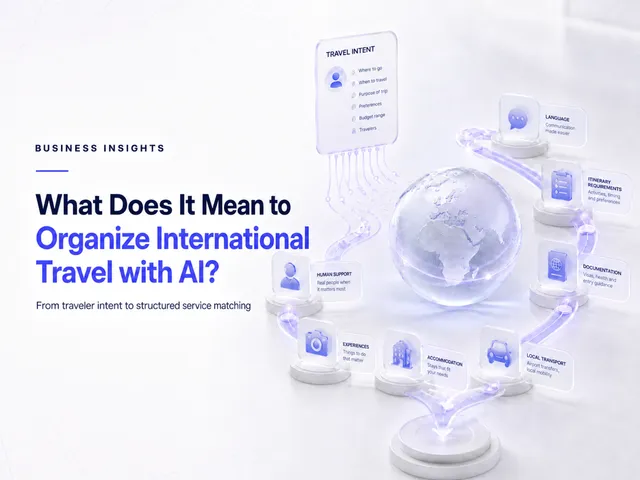
Business Insights
Beyond the Itinerary: Organizing International Travel with AI
Aug 31, 2026 · 4 min read
Business Insights
Travel AI Won't Replace Trust, But Has to Earn It
Aug 12, 2026 · 6 min read

Business Insights
What Y Combinator Is Saying About AI-Native Services — and a Direction We Recognize
Jul 29, 2026 · 5 min read
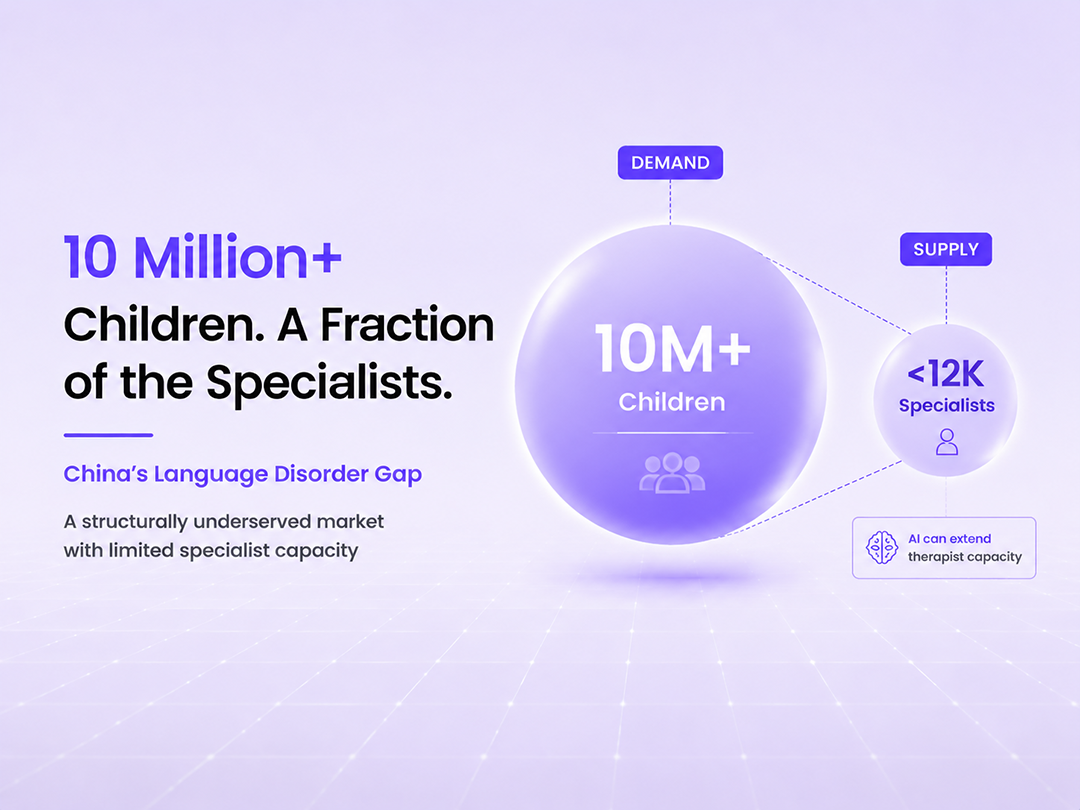
Business Insights
China's Language Disorder Gap Is Bigger Than the Public Conversation Suggests
Jul 17, 2026 · 7 min read